Literacy engagement starts with recognition. Students need to see their language, their questions, their cultural references, and the ways they make meaning reflected in classroom work.
This is one reason that at the LaVoulle Group, we continue to see so much potential in hip-hop pedagogy. Hip-hop gives educators a way to begin with culture and move toward analysis. It gives students opportunities to read closely, question what they hear and see, examine language, write with purpose, and create something of their own.
LaVoulle Group consultants do not see hip-hop as a Friday lesson theme or a playlist added to an otherwise traditional literacy block. For us, hip-hop is a cultural practice with a rich history of language, storytelling, argument, artistry, identity, and community. It involves serious intellectual work.
The question, then, is not how to make literacy instruction more entertaining. The better question is whether we are giving students enough ways to enter rigorous literacy work. Sometimes that entry point is a text from the curriculum. Sometimes it is a song, a verse, an image, a cultural reference, or a question students bring with them. For us, that is where hip-hop pedagogy matters. It expands the entry points without lowering the expectations.
What Is Hip-Hop Pedagogy in Literacy Instruction?
At The LaVoulle Group, we think about hip-hop pedagogy as a way of teaching that takes seriously the cultural knowledge students already possess. Hip-hop brings with it language, history, storytelling, creativity, critique, identity, and a long tradition of making meaning from lived experience. Those things belong in literacy instruction.
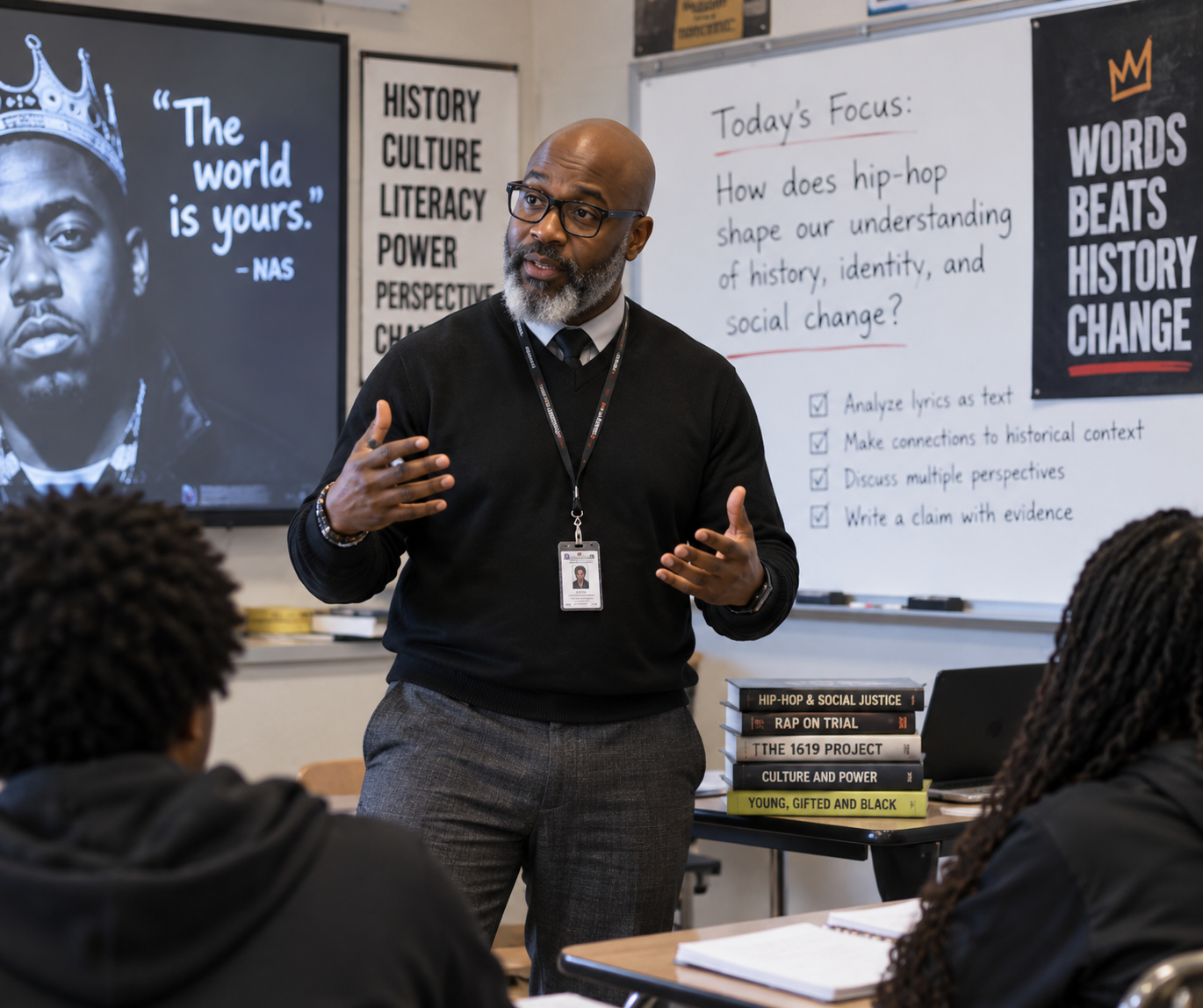
In practice, this might mean studying lyrics as texts, examining how an artist uses language to make an argument, analyzing visual storytelling, researching the history behind a song, or creating original work for an audience beyond the teacher. The possibilities are broad, but the purpose should remain clear. The literacy objective still matters.
If students are learning to analyze imagery, develop an evidence-based claim, evaluate a source, or revise their writing for an audience, those expectations do not change because the text comes from hip-hop.
What changes is the entry point; students can bring some of what they already know into the intellectual work of the classroom.
Why Might This Strengthen Reading Engagement?
Students pay attention when they have a reason to care about the question in front of them. In our literacy work, we have seen how recognition can become a starting point for deeper analysis. When students recognize something in a text, they often have more to say about it. The teacher then has an opportunity to move from recognition to analysis. This is where hip-hop pedagogy has real value.
A teacher might ask students to examine repetition, rhythm, imagery, perspective, word choice, or narrative voice in a verse. Then, rather than stopping with the song, the teacher can place it alongside a poem, speech, editorial, or historical document. Now students have to compare texts. They have to notice patterns. They have to make claims and support those claims with evidence. They have to think about audience, context, and the choices a writer or artist makes.
We are not interested in using hip-hop to make rigorous instruction easier. We are interested in using it to give students another way into rigorous instruction.
How Do We Keep Culture From Becoming a Gimmick?
This is where educators have to be intentional. Putting a song on a slide does not make a lesson culturally responsive. Adding a hip-hop reference to an existing activity does not make it hip-hop pedagogy. If you use culture only to get students' attention, you have missed the point.
We suggest you start with the learning: what do you want students to understand? What do you want them to analyze? What do you want them to question? What do you want them to create?
Then select the cultural texts and experiences that help students do that work.
A few places to begin:
- Study craft. Have students examine metaphor, tone, structure, word choice, repetition, and point of view in a short verse. Then ask them to identify those same choices in another literary or informational text.
- Practice argument. Have two artists, writers, or speakers in dialog about a shared concern. Have students examine their arguments, evidence, rhetorical strategies, and intended audiences.
- Build media literacy. Analyze a song alongside its video, album cover, interview, or social context. Ask students how each form contributes to, complicates, or changes the meaning.
- Create for an audience. Give students opportunities to write spoken-word pieces, cultural commentary, reviews, annotations, or research-based arguments for audiences beyond the teacher.
- Use local knowledge. Bring community stories, regional artists, neighborhood history, and questions students are already discussing into the classroom. When you do this, teach students to research and honor the people, places, and histories connected to those stories.
The point is not to make literacy instruction look like hip-hop. The point is to recognize the literacy practices already present in hip-hop and use them to help students read, write, analyze, question, and create at a high level.
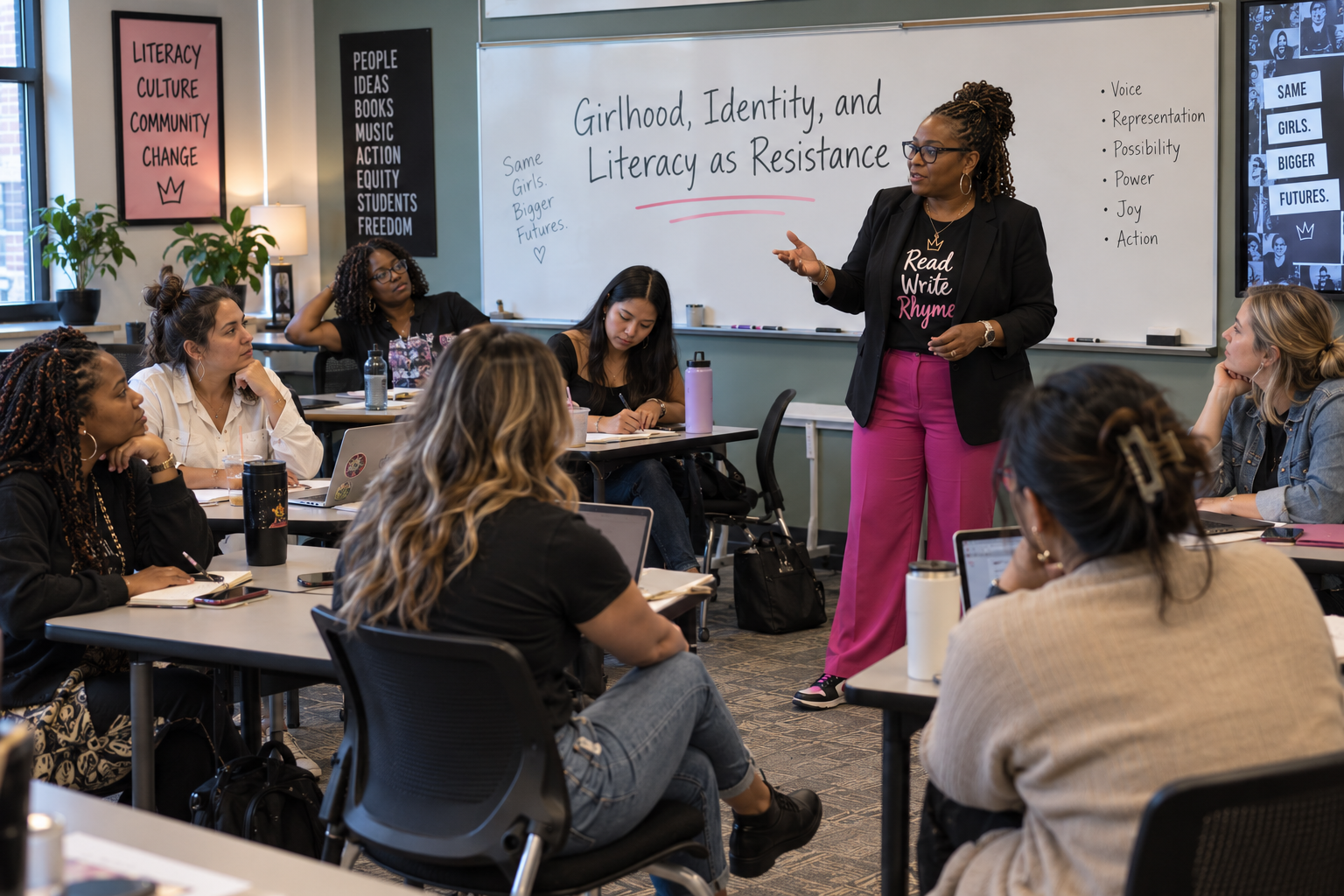
Read Write Rhyme brings educators together around this kind of meaningful, research-informed practice. [Join the March 2027 Atlanta conference and keep building literacy momentum.](/lp/read-write-rhyme-2027?utm_source=blog-aab&utm_medium=blog&utm_campaign=cmp_CVEE74RanCwrN7SE4ZKJwX0dxnlmrjBmAA60CCw1G1Y&utm_content=act_5BWJfBCrsn-G-AvLzX9xWJjNJkB-0_Qfp5rJgN5S8_k&utm_term=topic_hip-hop-literacy-engagement)