I have spent more than 20 years working in literacy, school leadership, and educational programming. I have worked with teachers, supervised instructional coaches, led school improvement efforts, and supported students across different educational settings. I have also spent years studying and working with hip-hop as a cultural and educational resource. One lesson continues to surface in my work: Students need opportunities to see themselves as authors of knowledge, not simply recipients. This is especially important for girls of all ages.
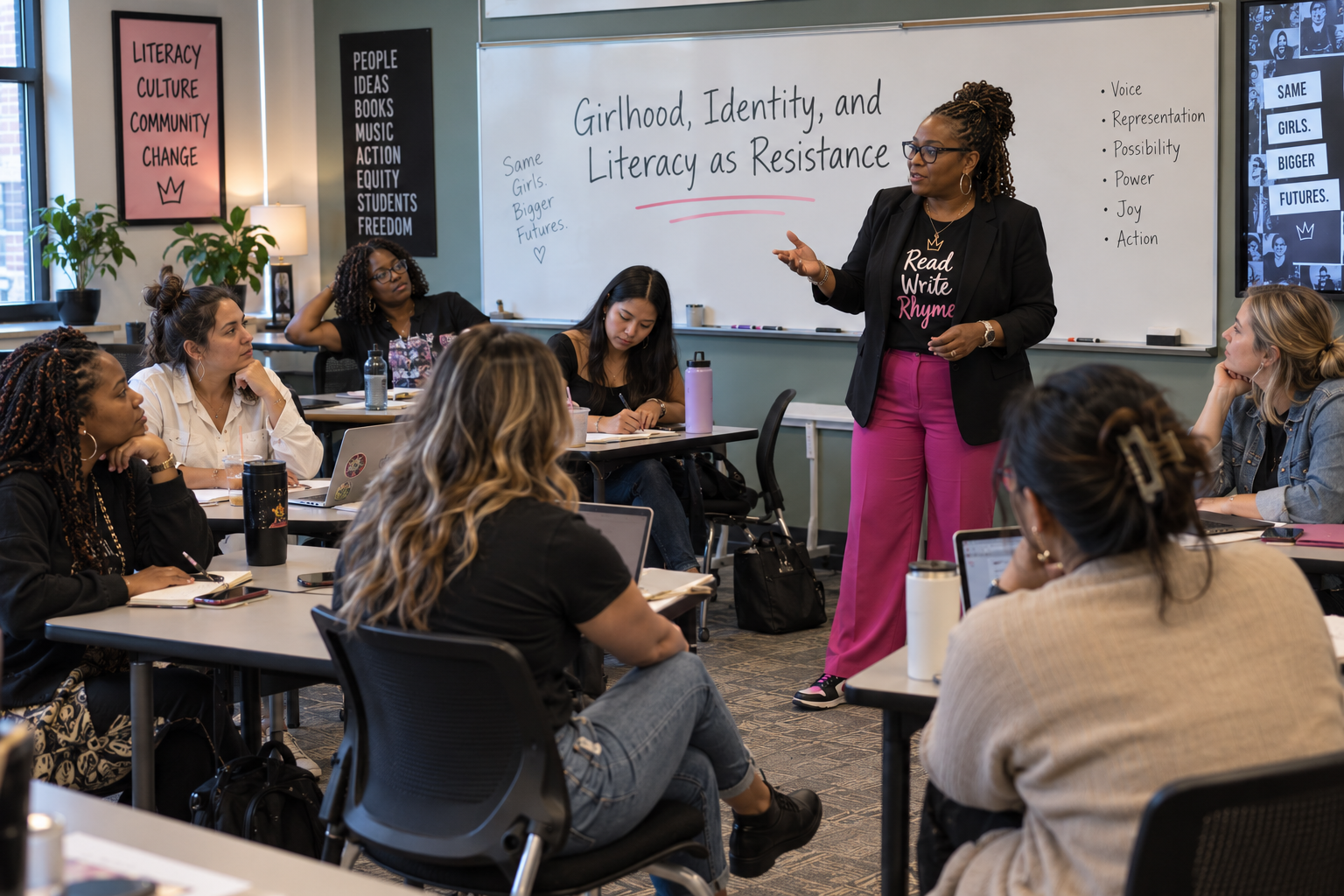
It is also why I wanted the [Read Write Rhyme Conference](https://readwriterhyme.com) to include the conference strand, Women in Hip-Hop: Girlhood, Identity, and Literacy as Resistance. Women in hip-hop have produced work worth reading, analyzing, researching, and teaching. Their contributions raise questions about authorship, identity, representation, and creative expression.
Sisterhood Is Something You Practice
I have worked in schools and educational communities where women carried significant responsibility for instruction, leadership, mentoring, and student success. I have watched those women solve problems, support colleagues, build programs, and continue working when institutional support fell short. These experiences shape how I understand sisterhood: not simply gathering women in the same room, but examining how we support one another, share knowledge, create opportunities, and make room for voices that often receive less attention.
The Read Write Rhyme Conference is my contribution to allowing educators a space to speak honestly about their work. I am particularly interested in what these women-focused conversations mean for girls. I believe that a girl who studies a woman as an author, producer, scholar, or entrepreneur encounters a broader range of possibilities for her own identity. I understand that representation alone is insufficient because students also need opportunities to write, analyze, create, and lead. Our girls need opportunities to practice authorship and educational spaces where their voices receive thoughtful attention. As an educator and conference founder, I have a responsibility to help create those opportunities.
Why the Women in Hip-Hop: Girlhood, Identity, and Literacy as Resistance Strand?
There is a difference between mentioning a woman artist and studying her work. Celebrating a woman's success is distinct from examining how she developed her voice, established authorship, built an audience, or challenged expectations. These distinctions matter, especially for girls and young women.
If we consider studying women in hip-hop through a literacy lens, students might examine narrative perspective, analyze rhetorical choices, research an artist's historical context, or develop an evidence-based argument. The work of women emcees, producers, DJs, entrepreneurs, and executives offers diverse entry points for inquiry. Through sessions at the [Read Write Rhyme Conference](https://readwriterhyme.com), we help participants understand that these entry points can be rigorous and standards-aligned. Educators are responsible for instruction, including selecting appropriate texts, setting clear learning goals, and teaching the literacy skills students need.
What Girlhood Taught Me About Voice
Girls enter classrooms with different experiences, interests, strengths, and expectations placed upon them. Those experiences influence how they participate, express themselves, and understand their opportunities. Working in single-gender educational spaces, I have seen what happens when you give students room to develop their voices and are fair and equitable about who speaks, whose work receives attention, and which perspectives appear in classroom materials.
These observations inform my interest in girlhood, identity, and literacy as resistance. When I use the word resistance, I mean the ways language, authorship, and creative expression allow people to question limiting narratives and assert their own perspectives.
Sisterhood, Scholarship, and Service
I want the Read Write Rhyme Conference to provide space for meaningful exchange, but I also want participants to leave with ideas they can examine in their own settings. I also wanted to center the relationship between sisterhood, scholarship, and service. These three ideas reflect how I understand professional responsibility.
- Sisterhood asks us to support one another and create opportunities for shared growth.
- Scholarship asks us to take women's intellectual contributions seriously and examine their work with rigor.
- Service asks us to apply our knowledge in ways that support students, educators, and communities.
None of these commitments exists in isolation.
---
Join us at the [Read Write Rhyme Conference](https://readwriterhyme.com) on Saturday, March 13, 2027 at DATE Academy in DeKalb County, GA. [Register now](https://www.eventbrite.com/e/read-write-rhyme-conference-2027-tickets-1982941093189) and be part of the conversation.